Motivation
Electrical machines are at the heart of the global energy transition. They enable transportation electrification, renewable energy generation, industrial automation, transport electrification and sustainable manufacturing. As performance, efficiency, reliability and sustainability requirements continue to increase, new machine topologies, materials, control strategies and digital design methodologies are becoming essential. The IEEE IES Electrical Machines Technical Committee (EMTC) provides an international forum for researchers, engineers, industry professionals and students to exchange knowledge, foster collaboration and advance the state of the art in electrical machines and electromechanical energy conversion systems.Scope
The EMTC promotes research, development, and industrial applications related to- Electromechanical energy conversion
- Rotating and linear electrical machines
- Machine design, modelling and optimization
- Advanced magnetic materials and manufacturing technologies
- Electric drives and integrated drive systems
- High-speed and high-performance machines
- Fault-tolerant and safety-critical systems
- Thermal management and reliability
- Condition monitoring and predictive maintenance
- AI, machine learning and digital twins for electrical machines
- Electrified transportation systems
- Renewable energy generation and storage applications
- Aerospace, marine and industrial electrification
Activities
EMTC members contribute through- Organization of special sessions, workshops, tutorials and webinars
- Technical activities within IEEE IES conferences
- Collaborative research initiatives
- Promotion of emerging technologies and research directions
- Dissemination of scientific and industrial best practices
- Support for students and early-career researchers
Why join the EMTC
By joining EMTC, members can- Network with leading international experts
- Participate in technical discussions shaping future research directions
- Develop collaborations across academia and industry
- Contribute to conference organization and special sessions
- Engage in technical leadership within IEEE IES
- Support the next generation of researchers and engineers
Get involved
The EMTC welcomes participation from academia, industry, research institutions and students worldwide. Whether your interest lies in fundamental machine design, advanced manufacturing, intelligent control, transportation electrification or emerging electromechanical technologies, the EMTC offers a platform to contribute, collaborate and help shape the future of electrical machines.Trend and Current Electric Machine Applications
- Electric Vehicles
- Aerospace
- Wind Power
- Robotics



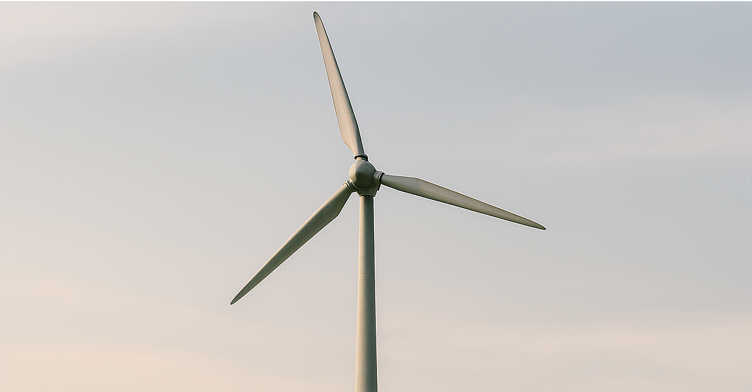
Trend and Current Electric Machine Applications
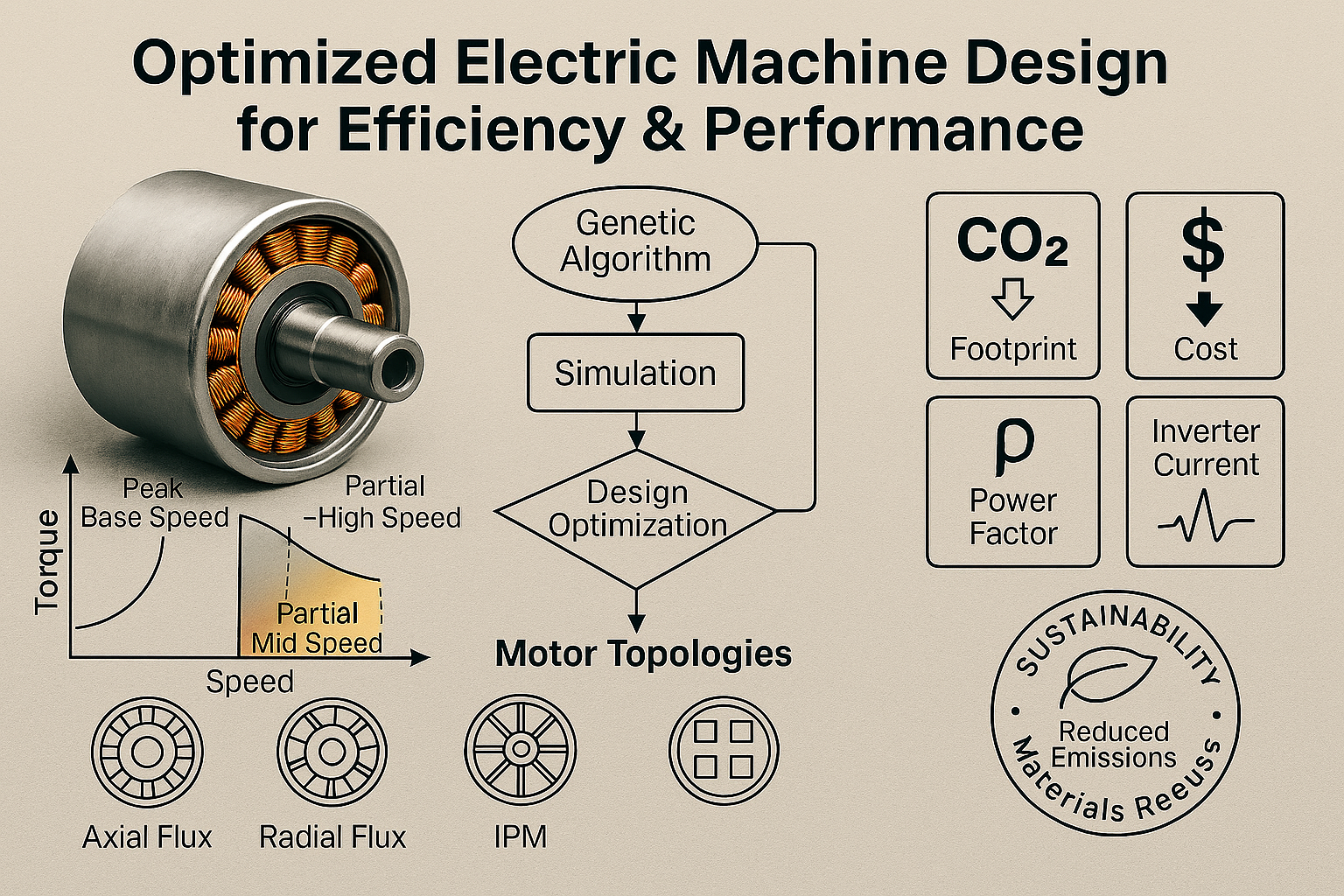
More efficient conversion systems require the optimization of electrical machine electromagnetic design to achieve specific performance levels (reduced torque ripple and increased efficiency and torque production), thermal and electrical design to obtain increased torque density, the integration of electrical machines with power electronics for traction applications to increase power density, and to implement new functionalities, such as integrated battery chargers.
Condition monitoring and fault diagnosis and prognosis are critical to ensure the reliability and efficient operation of the energy conversion devices in those processes where they are involved.
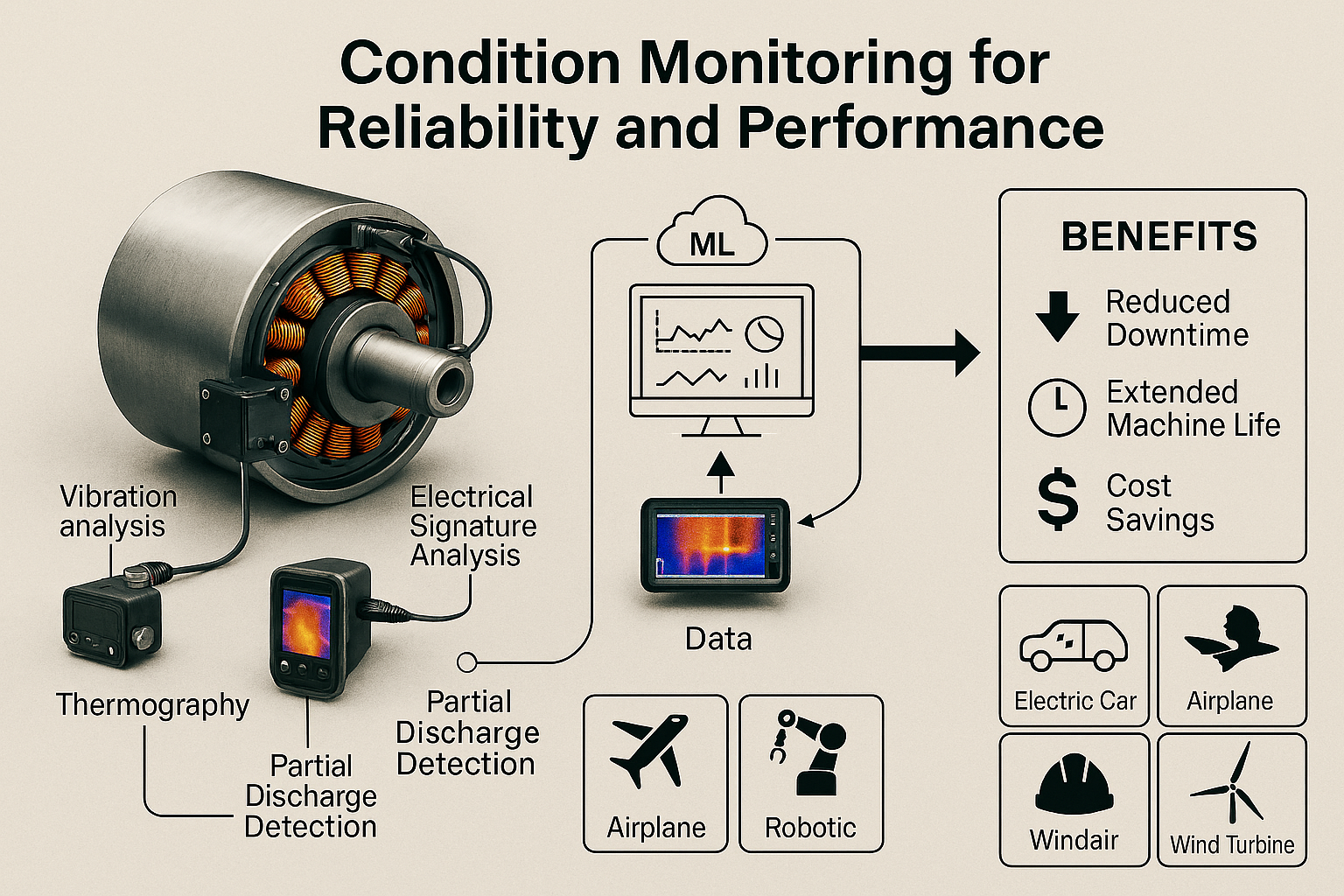
Future research in the condition monitoring area will be mainly oriented toward the following areas:
(1) Remaining Useful Life Prediction
Developing advanced methods to estimate the remaining useful life (RUL) of motor components for proactive maintenance.
(2) Universal Diagnostic Algorithms
Designing diagnostic tools that operate effectively under all machine conditions, including transient states.
(3) AI-Based Fault Detection
Applying artificial intelligence to automatically identify motor faults without user intervention.
(4) Smart Sensor Integration
Using smart sensors to combine and analyze multiple parameters for complete motor health monitoring.
(5) Drive Train Condition Analysis
Extending diagnostic techniques to evaluate the motor drive train and other mechanical components.
Speed Sensorless Control and Self-Commissioning
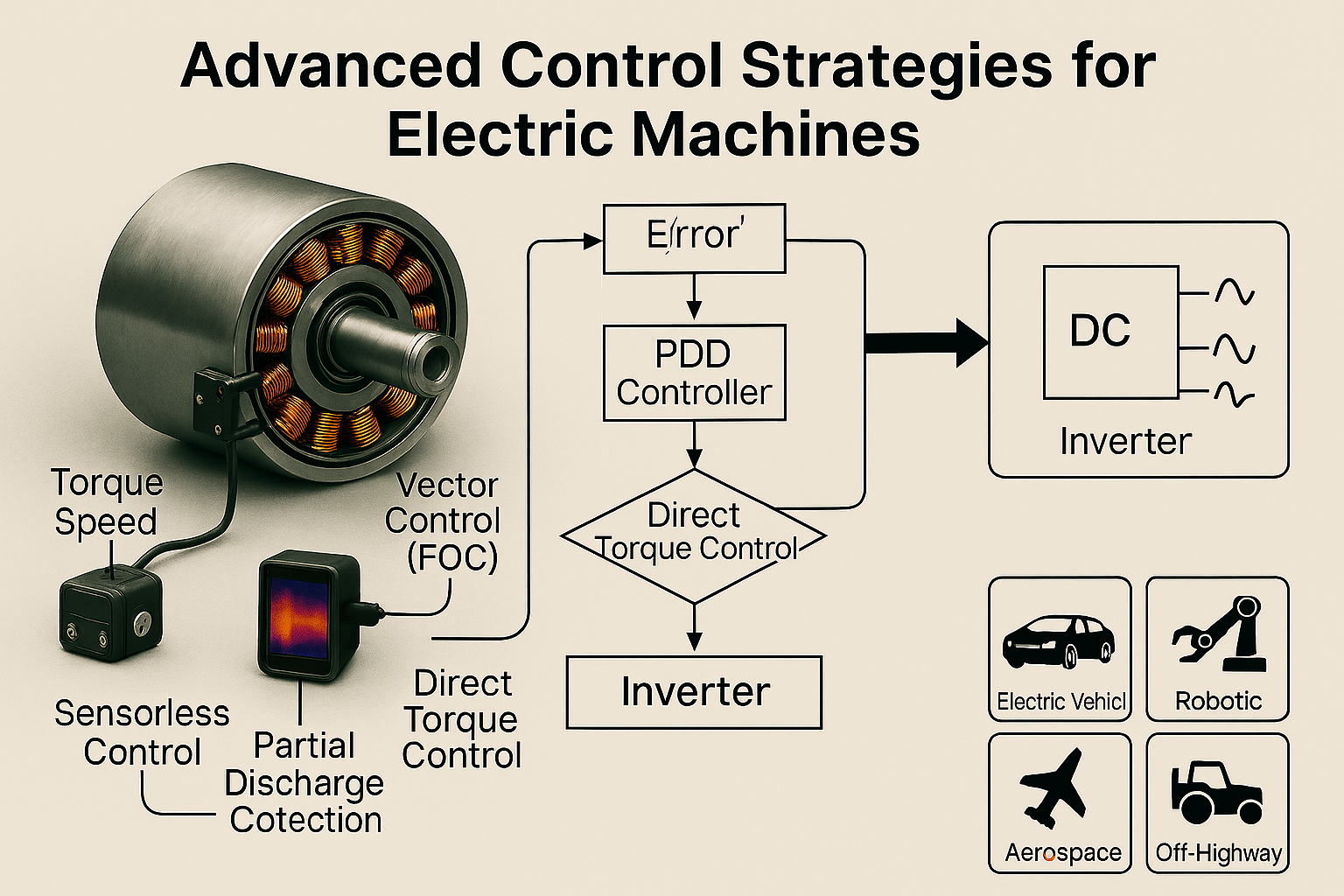
Modern systems integrate rotor position estimation directly into converter control, removing the need for external sensors. Combined with self-commissioning algorithms, these solutions enable easy, plug-and-play motor control.
Multiphase Drives and Fault-Tolerant Control
Using more than three phases reduces current per phase and improves reliability. Even if one phase fails, the system can keep running, making multiphase drives ideal for safety-critical areas like aircraft, traction, and large wind generators.
Predictive Motor Control
Model Predictive Control (MPC) offers excellent dynamic performance and simpler tuning compared to traditional control methods. With two main approaches—finite (FCS-MPC) and continuous (CCS-MPC)—MPC is becoming a key technology for industrial motor drives.